

Understanding Separation Anxiety: How to Help Your Child Feel Safe and Secure | Safe and Sound
Separation anxiety is a common part of childhood development. Understanding separation anxiety correctly will help parents recognize normal reactions, signs that require more attention, and how to provide appropriate support so that children gradually feel safe without their parents around.
It's not uncommon for a child to cry when their parents leave, cling to relatives, or refuse to go to school. For many families, these reactions can cause parents anxiety, confusion, or even guilt about leaving their child with others.
What is separation anxiety?
Separation anxiety is the feeling of worry, fear, or distress that comes with being temporarily separated from a parent or caregiver with whom a child is attached. Separation anxiety usually begins around the second half of the first year of life and can be pronounced in the early years of a child's life. As children get older, their ability to understand the absence and return of their parents usually develops gradually, so these reactions often lessen over time.
At this stage, children are still learning to understand the world around them. When parents leave, children are not entirely sure that their loved ones will return. Therefore, crying, searching for, or clinging to their parents is a natural reaction to seeking safety.
Separation anxiety is often considered a normal part of development when:
- They appear during the early stages of a child's development.
- This mainly happens during breakups or when changing environments.
- The symptoms gradually lessen as the child is reassured or becomes accustomed to the new environment.
- It does not seriously interfere with learning, playing, or other age-appropriate activities.
In other words, a child being sad or crying when their parents leave does not necessarily mean the child is experiencing psychological problems.
>>See also: Distinguishing between ordinary anxiety and anxiety disorders: Do you know?
Common signs of separation anxiety in children
Not all children with separation anxiety exhibit the same symptoms. Early recognition of the signs helps parents understand what their child is going through, rather than simply seeing it as whining, stubbornness, or a lack of independence.
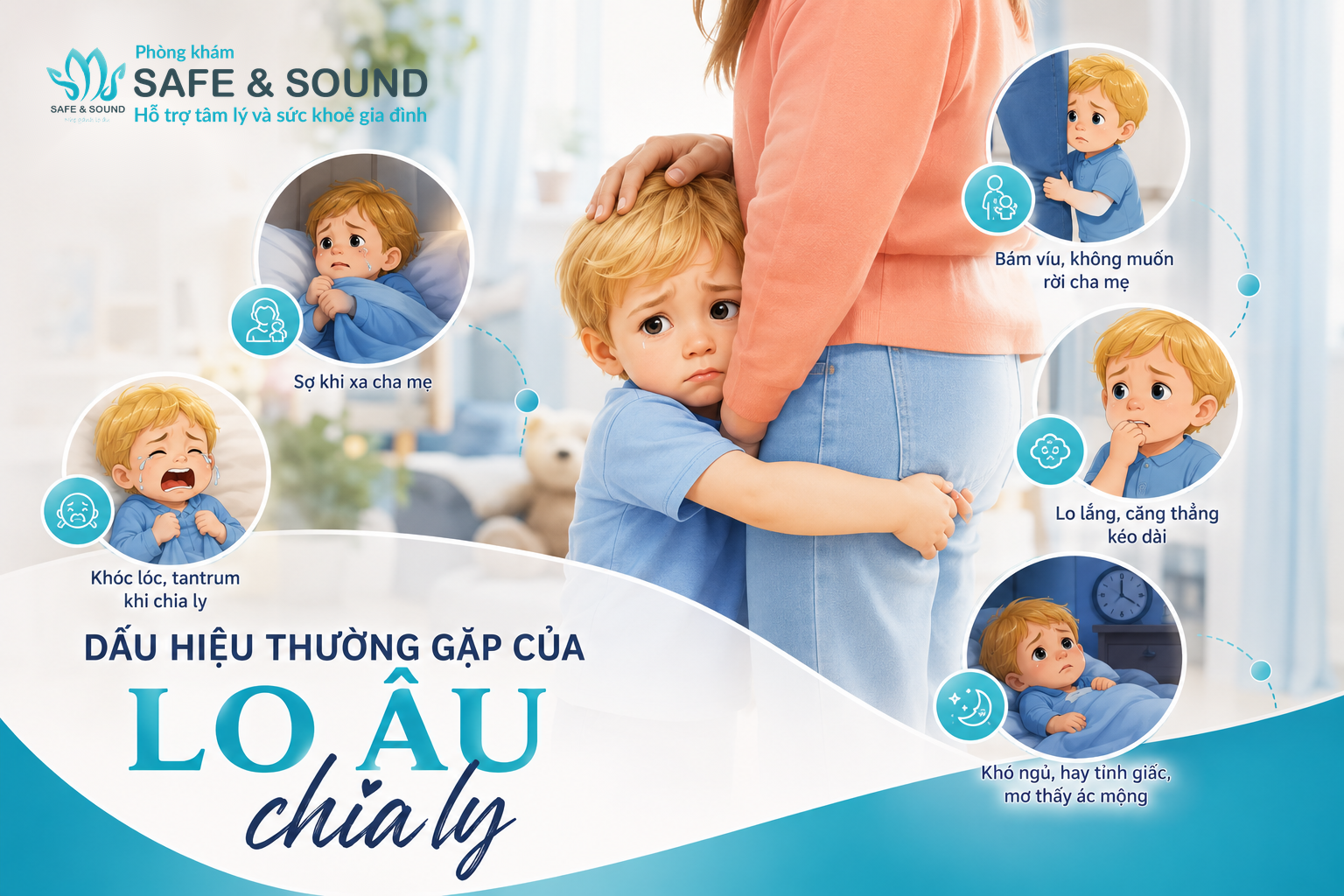
Emotional and behavioral signs
Children may cling tightly to their parents or caregivers, find it difficult to accept being separated from loved ones, and react strongly at times of parting. Some children cry intensely, beg their parents to stay, or try every way to avoid situations that require them to be away from home, such as going to school, staying with relatives, or participating in group activities.
In addition, children may refuse to sleep alone, frequently worry about their parents' safety, or become irritable and angry when they feel separation is inevitable. In some cases, this anxiety can even affect their ability to socialize with friends and participate in age-appropriate activities.
Physical signs
Children cannot always express their anxiety verbally. Sometimes feelings of insecurity are expressed through physical symptoms that seem unrelated to psychology. Children may complain of stomach aches, headaches, nausea, or fatigue before times when they have to be away from their parents.
These behaviors often appear in the morning before school, before bedtime, or when the child learns they will be staying with a different caregiver. While the physical discomfort is real, it may reflect the level of stress and anxiety the child is experiencing in separation situations.
When can these symptoms affect a child's life?
Separation anxiety is a common part of development. Parents need to pay more attention when signs of anxiety begin to significantly impact a child's daily life. This can occur when a child consistently refuses to go to school, doesn't want to participate in age-appropriate activities, or struggles to make friends or maintain social relationships.
In some cases, the fear of separation can disrupt the lives of entire families. When these effects are present and persistent, understanding the causes and considering appropriate support can help children better adapt to situations where they have to be away from loved ones.

How does separation anxiety affect children and families?
When fear becomes overwhelming, children may avoid many important experiences in their development. A reluctance to participate in group activities, fear of new environments, or over-reliance on parents can limit their opportunities to develop social skills and adaptability.
Separation anxiety is often associated with refusal to attend school. Frequent absences from school or stress associated with going to school can negatively impact a child's academic performance and overall school experience.
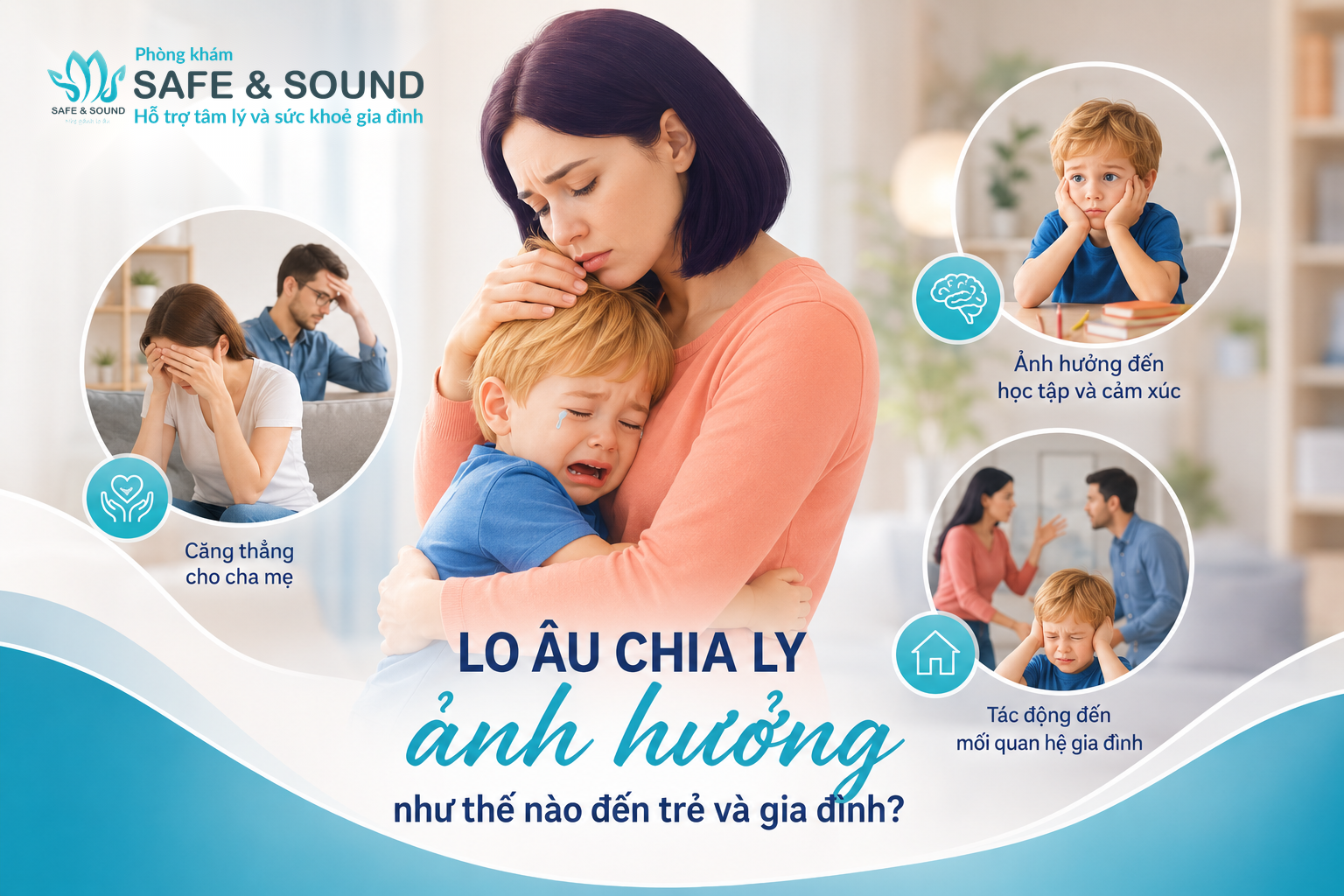
Separation anxiety not only affects a child's emotions and development but can also create significant pressure on the entire family. When children are constantly anxious or react strongly to being separated from their parents, daily family activities can be significantly restricted.
Parents often have to adjust their work schedules, personal plans, or shared activities to meet their children's needs, which can easily lead to stress, fatigue, or emotional exhaustion.
Furthermore, when the majority of the family's attention and resources are focused on the struggling child, other siblings may feel neglected or receive less attention. If this situation persists, it not only affects the child but also impacts the overall balance and atmosphere of the family.
Psychological perspective: Why does excessive comforting sometimes make it difficult for children to overcome separation anxiety?
When parents see their child crying, they often want to protect and comfort them immediately. However, if parents also become overly anxious whenever they have to be away from their child, the child may sense that insecurity. This inadvertently reinforces the belief that separation is truly dangerous or frightening.
When children are anxious, it is absolutely essential for parents to comfort and reassure them. However, if every separation scenario is eliminated to prevent children from experiencing discomfort, they may have fewer opportunities to learn that they are perfectly capable of coping with time away from their parents.
What children need is to experience appropriate, safe, and supportive separations. Through these experiences, children gradually learn that:
- The parents will return.
- I can manage on my own for a short period of time.
- The feeling of anxiety will eventually subside.
This is an important foundation that helps children develop independence and adaptability in the future.

What can parents do to help children feel safer?
When children experience separation anxiety, the important thing is not to try to completely eliminate the feeling of anxiety, but rather to help them gradually learn to adapt to periods away from loved ones in a safe and supportive environment. This process often requires patience, consistency, and coordination between family members and those accompanying the child.
One simple yet effective way to support children is to prepare them for temporary separations. When children know what to expect, who will care for them, and when their parents will return, feelings of anxiety often lessen. Short, clear, and consistent explanations can help children feel that things are predictable rather than a sudden change.
In addition, children often adapt better when gradually introduced to being away from their parents. Parents can start with short periods of time spent with a trusted relative or caregiver, then gradually increase the time as the child becomes more comfortable. Gradual exposure helps children build confidence and security without being overwhelmed by sudden changes.

During farewells, how parents react can also affect a child's emotions. Short, positive, and consistent goodbyes often help children adjust more easily than prolonged separations or constant attempts to comfort them. When parents demonstrate calmness and trust, children also tend to feel more secure in the face of temporary separation from loved ones.
Beyond the role of family, schools and caregivers can also play a crucial part in supporting children to overcome separation anxiety. Collaboration between parents, teachers, and direct caregivers helps create a consistent environment where children feel understood, supported, and can gradually adapt to being away from their parents in daily activities.
When should families seek professional help?
Not all cases of separation anxiety require professional intervention. In fact, many children can gradually adapt better with parental support, appropriate reassurance, and time to adjust to the changes in their lives. However, in some cases, the fear of separation from parents is no longer just a normal developmental reaction but begins to significantly affect the child's learning, daily life, and relationships.
Families may consider seeking professional support if a child consistently refuses to go to school, avoids age-appropriate activities, or struggles to participate in social activities due to separation anxiety. Additionally, if anxiety persists for weeks, intensifies over time, or causes frequent distress during separation, these are also signs that the child may need more in-depth assessment and support.
It's not just children who need support during this process; parents can also be vulnerable. Many families feel stressed, exhausted, or stuck when they've tried many approaches without improvement. In such cases, talking to a mental health professional or child psychologist can help families better understand what their child is going through and develop support strategies tailored to the child's age, circumstances, and individual needs.
|
Token |
Things to note |
|
Children consistently refuse to go to school or participate in age-appropriate activities. |
The fear of separation began to affect their studies and daily lives. |
|
Anxiety that is prolonged or worsening |
Symptoms do not subside over time or become more severe. |
|
It is difficult to maintain social relationships. |
Children avoid group environments and have difficulty integrating with peers. |
|
Family life has been significantly affected. |
The whole family had to constantly adjust their plans because of the children's fear of separation. |
|
Parents feel stuck in the support process. |
Many methods have been tried, but the desired improvement has not been achieved. |
It's important to remember that seeking professional support doesn't necessarily mean a child is experiencing a serious problem. It's simply a way for families to gain a broader perspective, better understand their child's emotional needs, and find appropriate ways to support them at each stage of development.
Conclude
Separation anxiety is a fairly common experience in a child's development and often reflects a need for attachment, protection, and a sense of security. However, when the fear of being separated from parents becomes prolonged, intense, or affects learning, daily life, and relationships, it may be a sign that requires more attention.
The important thing is not to help children avoid separation entirely, but to support them step by step in learning to adapt to periods away from loved ones in a safe environment. Parents' understanding, patience, and consistency can lay the foundation for children to build a greater sense of security and confidence as they grow up.
In cases where persistent anxiety symptoms cause children to struggle with learning, daily activities, or affect the overall family atmosphere, seeking professional support can help parents better understand their child's emotional needs and choose appropriate ways to support them.
At SNS (Safe & Sound Clinic) , mental health and psychology professionals can support families in comprehensively assessing their child's condition and work with parents to develop solutions tailored to each stage of development, helping children feel safer and gradually adapt to life changes.
